|
|
|
Categories
|
|
Information
|
|
Featured Product
|
|
|
 |
|
|
There are currently no product reviews.
 ;
Super nice! Good to have a manual in digital format.
;
Great job supplying the manual.
Many of these products weerepretty obscure, so it was great that you had
the manual for it!
;
Great manual, would not have been able to operate my machine without it!!
James Dawson August 18, 2012
;
excellent value & price! Includes everything you need to know about the NN-C777! I would buy this again.
;
Very satisfied! I was searching for several days, but nope; till I discovered your webside and there it was at a very reasonable price. Keep up the good work!
Paul
Flanders
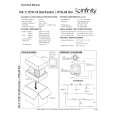
MR SERIES LOUDSPEAKERS
If only an 8-ohm rating is given, the amp/receiver may or may not be designed to handle 4-ohm combined ratings. Consult the owner�s manual of the amp/receiver for clarification. 2. Wrong speaker switch, �A� or �B� speaker output. 3. Sound source (CD,cassette deck, turntable) not turned on, not activated, not hooked up or not selected on amp/receiver front panel.
POWER HANDLING
Thanks to their high efficiency, the JBL MR Series Loudspeakers will produce reasonable volume levels in a room of moderate size with very little amplifier power. However, using a small amplifier to obtain the desired volume listening levels may lead to overdriving the amplifier. This will generate high distortion levels and may cause damage to your loudspeaker. For the best performance, an amplifier should be selected with an output rating that is greater than the maximum power that will be used. This margin of reserve power will ensure that the amplifier will not attempt to deliver more power than its design allows. However, the amplifier�s power rating per channel must not exceed the maximum recommended amplifier power for that specific loudspeaker model. Please see the specification section for details. Following these guidelines will provide virtually distortion-free sound reproduction and long loudspeaker life.
No sound from one speaker 1. Balance control turned all the way left or right.
2. Speaker wire has become disconnected. 3. One of the connections between sound source and amp/receiver is faulty or has become disconnected.
Both speakers play at low volumes but shut off as volume is increased OR sound turns on and off intermittently A few strands of speaker wire may be shorting out. Recheck the connections. Recheck the impedance of the amp. Bass is very weak AND/OR sound seems to come from each speaker separately, without creating a stable stereo image between the speakers.
1. The polarity (+ & �) of one speaker has been reversed relative to the other. Double check connections. 2. Speakers are too far away from back and side walls or too far apart. Experiment again with the speaker placement. If you are still encountering problems, consult your JBL dealer. Additional Areas to Check When Using an AV Receiver: No sound at all or very faint sound from the center channel or other speakers 1. Speaker wire has become disconnected.
TROUBLESHOOTING
The vast majority of new speaker �malfunctions� end up being traced to connections or switch settings. To avoid packing up correctly functioning speakers and sending them off, only to find that they�re not really at fault, check the following tips first, before requesting service.
No sound at all or very faint sound from both speakers 1. Amp/receiver tape monitor button pushed in while using CD, FM or phono inputs.
5
|
|
|
> |
|